

















 AI-Powered Personalization: Use AI to deliver highly tailored campaigns to the right audience.
Enhanced Decision-Making: Leverage AI analytics to improve campaign precision and speed.
Collaborative Marketing: AI as a strategic partner—working alongside human marketers to boost creativity, such as generating custom content or AI music for campaign videos.

Real-Time Data Insights: Real-time analytics will provide immediate, actionable insights for faster decision-making.
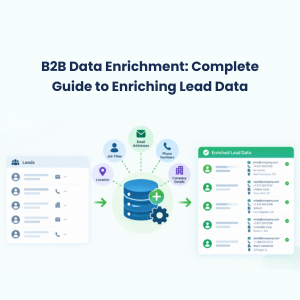
Data Cleansing and Enrichment: Accurate, enriched data will enable better targeting and more effective campaigns.
Predictive Analytics: Advanced predictive models will forecast customer behavior and optimize strategies.
Hyper-Personalized Automation: Use behavioral data to automate hyper-targeted, relevant content delivery.
Seamless Multi-Channel Experiences: Create consistent marketing journeys across platforms.
Behavioral Insights for Optimization: Leverage automation to analyze customer actions and optimize campaigns instantly.

Refines segmentation: Helps businesses target the right audience with precision.
Improves engagement: Tailored messaging increases conversion rates.
Boosts ROI: Focused campaigns lead to more efficient use of resources.
30% increase in qualified leads.
25% boost in conversion rates.

Identifies key accounts: Pinpoints high-value prospects for maximum ROI.
Aligns teams: Bridges marketing and sales for cohesive execution.
Enhances targeting: Enables precise and relevant engagement with decision-makers.
27% increase in engagement rates with targeted accounts.
20% growth in revenue from key clients.

Streamlines workflows: Automates repetitive tasks, saving time and resources.
Boosts campaign efficiency: Ensures consistency and accuracy in execution.
Accelerates sales cycles: Shortens the time between lead capture and conversion.
40% reduction in manual tasks related to data management.
15% faster lead-to-conversion cycles.