


How to Evaluate B2B Data Vendors for Accuracy and Compliance
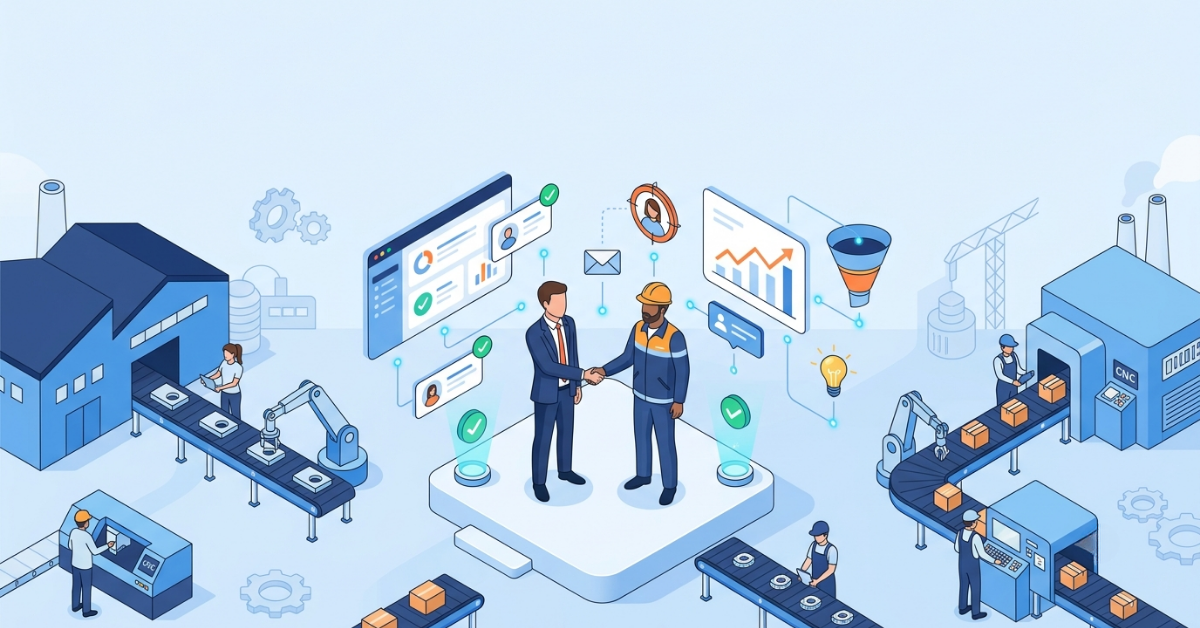
Manufacturers today are competing for buyers who no longer wait for a trade show floor or a phone call from a regional sales rep to make purchasing decisions. Procurement teams, plant managers, and engineering leads now research suppliers online, compare technical specifications across multiple vendors, and loop in several stakeholders long before a sales conversation ever begins. For manufacturers, this shift means that finding qualified buyers and generating a consistent stream of sales opportunities can no longer rely on referrals, cold calls, or a booth at an industry expo alone.
Winning in this environment requires a structured lead generation strategy — one that blends digital marketing, targeted outbound prospecting, and high-quality contact data into a repeatable system. This guide breaks down exactly how manufacturers can build that system, from identifying the right buyers to measuring what’s working and fixing what isn’t.
Manufacturing is one of the few B2B sectors where the cost of a missed opportunity is especially high: production capacity has to be planned months in advance, and an inconsistent pipeline directly affects staffing, inventory, and equipment utilization. Understanding why lead generation matters starts with understanding how the buyer’s process has changed, and what a structured approach makes possible on the business side.
The manufacturing buyer’s journey has changed dramatically over the past decade. Where purchasing decisions once started with a phone call to a known supplier, they now typically begin with a search engine query, a review of technical datasheets, or a search on an industry-specific directory. Buyers compare vendors on specifications, certifications, lead times, and pricing before a salesperson is ever contacted — and in most B2B manufacturing deals, three to seven stakeholders (engineering, procurement, operations, and finance) are involved in the final decision.
A well-structured lead generation strategy delivers measurable advantages for manufacturing businesses:
A lead generation strategy for manufacturers has to be built on specifics, not generic B2B best practices. Because manufacturing sales cycles are longer and involve more technical evaluation than most industries, the strategy needs to start with a precise picture of the buyer and a set of goals that reflect realistic production and revenue timelines — not borrowed benchmarks from unrelated sectors.
Before launching any campaign, manufacturers need a precise definition of who they’re trying to reach. A well-defined ideal customer profile (ICP) should account for:
A narrow, well-researched ICP prevents manufacturers from spreading marketing and sales resources across buyers who are unlikely to convert.
Once the ICP is defined, manufacturers should set measurable goals tied directly to business objectives — for example, a target number of marketing-qualified leads (MQLs) per quarter, a specific sales-qualified lead (SQL) conversion rate, or a revenue target attributable to new pipeline. Goals should be realistic given sales cycle length, current market visibility, and available budget, and should be revisited quarterly as campaigns generate data.
No single channel can carry a manufacturing lead generation strategy on its own. The strongest programs combine organic, outbound, and networking channels — each playing a different role in the buyer’s journey.
Channel Type | Best For | Sales Cycle Impact | Relative Cost |
SEO & Content | Long-term visibility, inbound demand | Shortens research phase | Low ongoing cost, high setup effort |
Cold Email & LinkedIn | Direct access to specific accounts | Accelerates early-stage outreach | Low to moderate |
Industry Directories | Passive discovery by active buyers | Moderate | Low to moderate |
Trade Shows & Expos | High-value, relationship-driven deals | Can shorten late-stage negotiation | High |
Referral Programs | High-trust, pre-qualified leads | Often fastest to close | Low |
Because manufacturing purchases are technical and involve multiple reviewers, content plays a bigger role in the sales process than it does in many other B2B categories — it has to do the work of answering engineering questions, justifying cost internally, and building credibility before a rep ever gets on a call. That means content strategy needs to be mapped deliberately to how manufacturing buyers actually evaluate vendors.
Manufacturing buyers consume different types of content depending on where they are in the evaluation process:
Educational content that answers real technical and business questions — rather than purely promotional material — is what earns trust with manufacturing buyers, who are often engineers or procurement specialists evaluating claims critically.
Generating volume is only half the job — without a clear qualification process, sales teams end up chasing leads that were never going to close, while genuinely promising prospects lose momentum from a lack of follow-up. Manufacturers need a defined system for separating sales-ready leads from those that still need nurturing, and a process for managing both.
Manufacturers should qualify leads before engaging them in the sales process by considering these key factors:
Leads that don’t meet all qualification criteria shouldn’t be discarded — they should be nurtured. This typically involves automated email sequences with relevant educational resources, periodic follow-ups from sales or account development reps, and CRM workflows that track engagement over time so sales can re-engage at the right moment, particularly given the long consideration windows common in manufacturing purchases.
Even a well-designed strategy runs into friction that’s specific to how manufacturing sales actually work. Recognizing these obstacles early — and having a practical response ready for each — keeps a lead generation program from stalling out once it moves from planning into execution.
Challenge | Practical Recommendation |
Long sales cycles | Build multi-touch nurture sequences that keep the brand visible over months, not weeks |
Limited digital visibility | Invest in SEO and technical content targeting the specific terms buyers search |
Niche target markets | Use highly filtered, industry-specific contact data rather than broad prospecting lists |
Outdated contact information | Regularly refresh and verify contact databases to avoid wasted outreach |
Difficulty reaching decision-makers | Use multi-channel outreach (email + LinkedIn + phone) to reach multiple stakeholders in the buying group |
Low conversion rates | Tighten lead qualification criteria and align sales follow-up speed with lead engagement signals |
A lead generation strategy is a living system, not a one-time setup — and the only way to know whether it’s actually working is to track it against the right numbers. For manufacturers, that means going beyond top-line traffic and looking at metrics that connect marketing activity directly to pipeline and revenue outcomes.
Tracking the right metrics is what separates a lead generation program that improves over time from one that stalls. Key KPIs include:
KPI | What It Measures | Why It Matters |
Website traffic | Volume of visitors researching your business | Indicates top-of-funnel visibility |
Qualified leads | Leads matching ICP and intent criteria | Measures lead quality, not just volume |
Conversion rate | Percentage of leads advancing to the next stage | Highlights funnel efficiency |
Cost per lead | Marketing spend divided by leads generated | Tracks channel efficiency |
Sales pipeline value | Total value of active opportunities | Reflects revenue potential in motion |
Customer acquisition cost (CAC) | Total cost to acquire a paying customer | Measures overall program profitability |
Return on investment (ROI) | Revenue generated relative to program spend | Validates the overall strategy |
Every strategy outlined above — ICP targeting, outbound prospecting, lead qualification, and performance measurement — depends on having accurate data to work from. This is where a purpose-built B2B data platform becomes part of the lead generation infrastructure, not just a nice-to-have.
A lead generation strategy is only as strong as the data behind it. ReachStream supports manufacturers by providing:
A predictable manufacturing sales pipeline doesn’t come from any single tactic — it comes from combining organic visibility, targeted outbound prospecting, high-quality contact data, and consistent measurement into one connected system. Manufacturers that clearly define their ideal customer, invest in the right mix of channels, qualify leads rigorously, and continuously optimize based on performance data are the ones that build lead generation engines capable of sustaining long-term growth.
Manufacturing lead generation is the process of identifying, attracting, and qualifying potential buyers for industrial or manufactured products through a combination of digital marketing, outbound prospecting, and industry networking.
The most effective approach combines organic channels (SEO, content marketing), outbound prospecting (cold email, LinkedIn), and industry networking (trade shows, referrals). The right mix depends on deal size, sales cycle length, and target market.
Manufacturers attract qualified buyers by clearly defining their ideal customer profile, publishing technical and educational content that addresses real buyer questions, and using verified contact data to target outreach precisely.
A sales-ready lead typically matches the target industry and company profile, includes a contact with decision-making authority, shows clear buying intent, and has a defined project need or timeline.
Manufacturing sales cycles vary by industry and deal complexity but often range from several weeks to many months, particularly for custom production or high-value contracts involving multiple stakeholders.
Improving lead quality involves tightening ICP criteria, using verified and enriched contact data, aligning content with genuine buyer needs, and applying consistent qualification standards before leads reach sales.
Verified data reduces wasted outreach, improves response rates, and ensures sales and marketing teams are targeting the right decision-makers—especially in manufacturing, where buying groups are often small and highly specific.
Marketing professional with a Master’s degree in Marketing, specializing in SEO, content strategy, social media, performance marketing, prospecting, and demand generation.
Access 200M+ verified business emails and grow your sales pipeline effortlessly.
Don't forget to share this post!















Check out our other blogs!
The Complete Guide to B2B Data Verification in 2026

Cold Email vs. LinkedIn Outreach: Which Wins in 2026?
How Many Follow-Ups Should a Cold Email Sequence Have?
ReachStream Prospect vs. Prospeo: Which Delivers More Accurate Data