


How to Evaluate B2B Data Vendors for Accuracy and Compliance
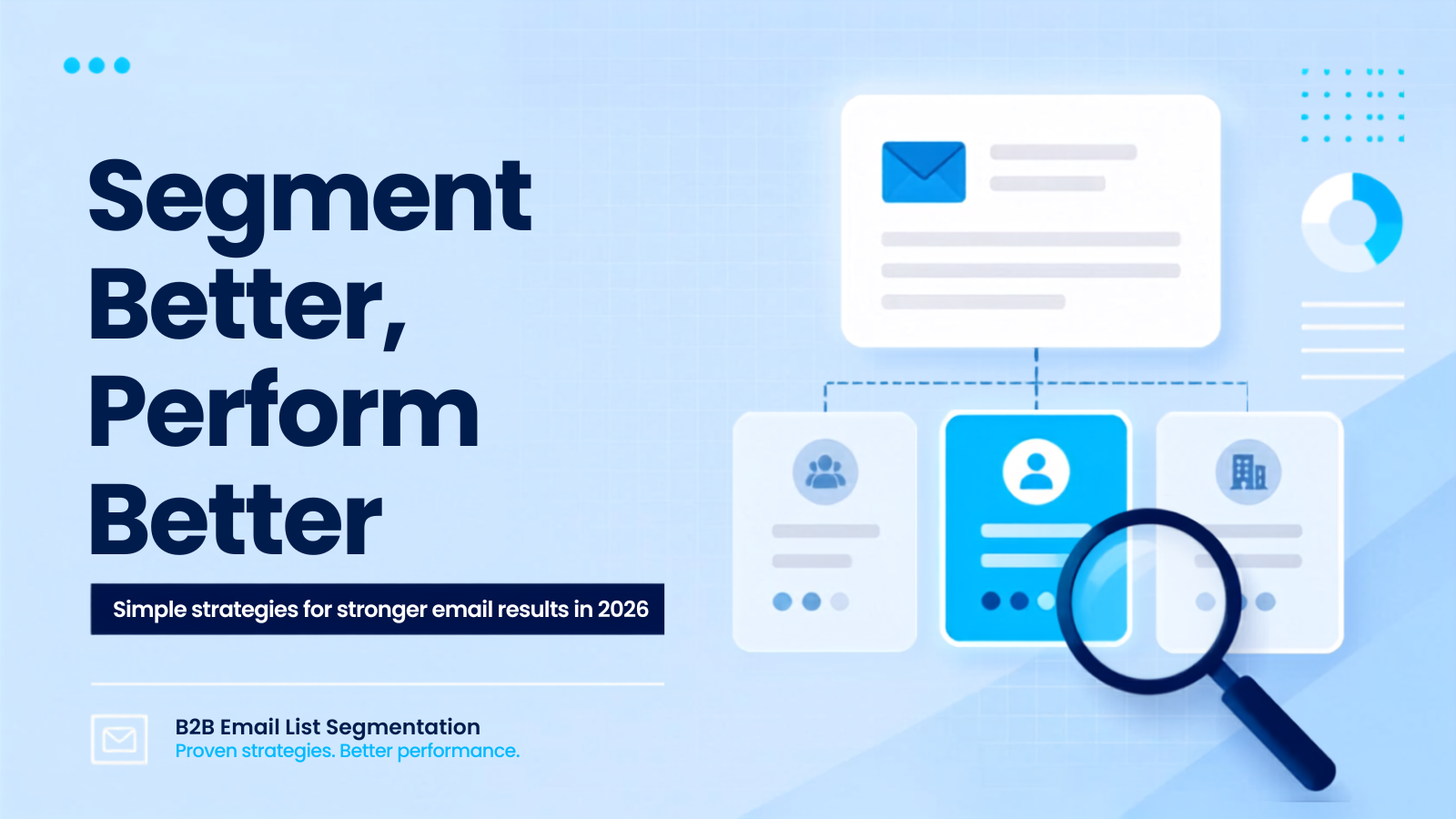
Sending the same email to every contact on your list is one of the fastest ways to reduce engagement and increase unsubscribe rates. Today’s B2B buyers expect relevant, personalized communication that addresses their industry, business challenges, and stage in the buying journey. That’s where B2B email list segmentation becomes essential.
Email segmentation is the process of dividing your email database into smaller, targeted groups based on specific characteristics such as industry, company size, job role, location, or buyer behavior. Instead of relying on generic campaigns, businesses can deliver highly relevant messages that improve engagement, build trust, and drive more qualified leads.
According to industry research, segmented email campaigns consistently outperform non-segmented campaigns by generating higher open rates, click-through rates, and conversions. More importantly, they help sales and marketing teams reach the right decision-makers with the right message at the right time.
In this guide, you’ll learn proven B2B email segmentation strategies, best practices, common mistakes to avoid, and how a well-maintained, verified email database can significantly improve your campaign performance.
B2B email list segmentation is the practice of organizing business contacts into targeted groups based on shared characteristics. Rather than sending identical emails to every subscriber, marketers create personalized campaigns that address the specific needs and interests of each audience segment.
For example:
This targeted approach increases relevance, resulting in stronger engagement and better marketing ROI.
B2B purchasing decisions typically involve multiple stakeholders, longer sales cycles, and complex buying journeys. A single message rarely resonates with every prospect.
Effective segmentation helps businesses:
When recipients consistently receive content relevant to their role and business challenges, they are more likely to engage and move further down the sales funnel.
Different industries have different priorities, regulations, and pain points.
Examples include:
Industry-specific campaigns allow marketers to create messaging that directly addresses unique business challenges.
Example:
A cybersecurity company can send compliance-focused content to healthcare organizations while sharing cloud security best practices with SaaS companies.
Business needs often vary depending on organizational size.
Typical segments include:
Small businesses may prioritize affordability and simplicity, while enterprise organizations often seek scalability, compliance, and advanced integrations.
Tailoring your messaging based on company size significantly improves campaign relevance.
Not every contact influences purchasing decisions in the same way.
Useful job title segments include:
Each role has different goals and concerns.
For example:
A Marketing Director may want to improve lead generation, while an IT Manager is more interested in security, implementation, and system integration.
Location-based segmentation is valuable for businesses operating across multiple regions.
You can segment by:
This enables marketers to send emails during optimal local business hours and create region-specific campaigns, event invitations, or compliance-related messaging.
Every prospect is at a different stage of the sales funnel.
Common stages include:
Educational content works well for prospects in the awareness stage, while product comparisons, case studies, and demos are more effective for decision-stage buyers.
Matching email content to the buyer journey improves conversion rates and nurtures stronger relationships.
Analyzing recipient behavior provides valuable insights into audience interest.
Useful engagement segments include:
Highly engaged subscribers can receive product updates and exclusive offers, while inactive contacts may benefit from re-engagement campaigns.
Existing customers require different communication than prospects.
Segments may include:
Personalized lifecycle campaigns help strengthen customer relationships while supporting upselling and cross-selling opportunities.
Accurate segmentation begins with high-quality data.
Regularly remove:
A clean email list improves deliverability and ensures your segmentation efforts are based on reliable information.
Email verification helps eliminate invalid or risky email addresses before campaigns are launched.
Benefits include:
Using verified business email data also ensures your sales team works with accurate contact information.
Effective segmentation depends on quality data.
Useful data points include:
The richer your customer data, the more personalized your campaigns can become.
Business information changes frequently.
Employees switch jobs, companies grow, and buying interests evolve.
Review and update your segmentation regularly to ensure campaigns remain relevant and accurate.
Even experienced marketers make segmentation mistakes that limit campaign performance.
Avoid these common issues:
Balanced segmentation based on accurate information delivers the best long-term results.
Track these key performance indicators (KPIs) to evaluate your segmentation strategy:
Comparing these metrics across different audience segments helps identify which groups respond best and where further optimization is needed.
Successful segmentation depends on accurate and up-to-date business data.
ReachStream helps businesses build targeted email campaigns by providing verified B2B contact data enriched with valuable firmographic and professional information, including:
With reliable data, marketing and sales teams can create precise audience segments, improve personalization, reduce bounce rates, and connect with the right decision-makers more effectively.
B2B email list segmentation is no longer optional, it’s a fundamental component of successful email marketing. By organizing your contacts based on factors such as industry, company size, job role, location, buyer journey stage, and engagement level, you can deliver more relevant communications that resonate with your audience.
The effectiveness of any segmentation strategy depends on the quality of your data. Maintaining clean lists, verifying email addresses, and continuously updating contact information help ensure your campaigns reach the right inboxes and achieve stronger results.
When combined with a reliable B2B data source and thoughtful personalization, email segmentation can improve engagement, increase conversions, strengthen customer relationships, and maximize the return on your email marketing efforts.
B2B email list segmentation is the process of dividing your business email database into smaller groups based on shared characteristics such as industry, company size, job title, location, buyer journey stage, or engagement level. This allows marketers to send more relevant and personalized emails, improving open rates, click-through rates, and conversions.
Email segmentation helps businesses deliver targeted content to the right audience at the right time. By tailoring messages to specific customer segments, companies can increase engagement, generate higher-quality leads, improve email deliverability, reduce unsubscribe rates, and achieve a better return on investment (ROI) from their email marketing campaigns.
Some of the most effective B2B email segmentation strategies include segmenting contacts by:
Combining multiple segmentation criteria can help create highly personalized campaigns that drive better results.
Email verification ensures your contact database contains valid and active email addresses. A verified email list reduces bounce rates, improves sender reputation, and increases email deliverability. When combined with accurate firmographic and demographic data, email verification helps create more reliable audience segments for targeted marketing campaigns.
Marketing professional with a Master’s degree in Marketing, specializing in SEO, content strategy, social media, performance marketing, prospecting, and demand generation.
Access 200M+ verified business emails and grow your sales pipeline effortlessly.
Don't forget to share this post!















Check out our other blogs!
The Complete Guide to B2B Data Verification in 2026

Cold Email vs. LinkedIn Outreach: Which Wins in 2026?
How Many Follow-Ups Should a Cold Email Sequence Have?
ReachStream Prospect vs. Prospeo: Which Delivers More Accurate Data