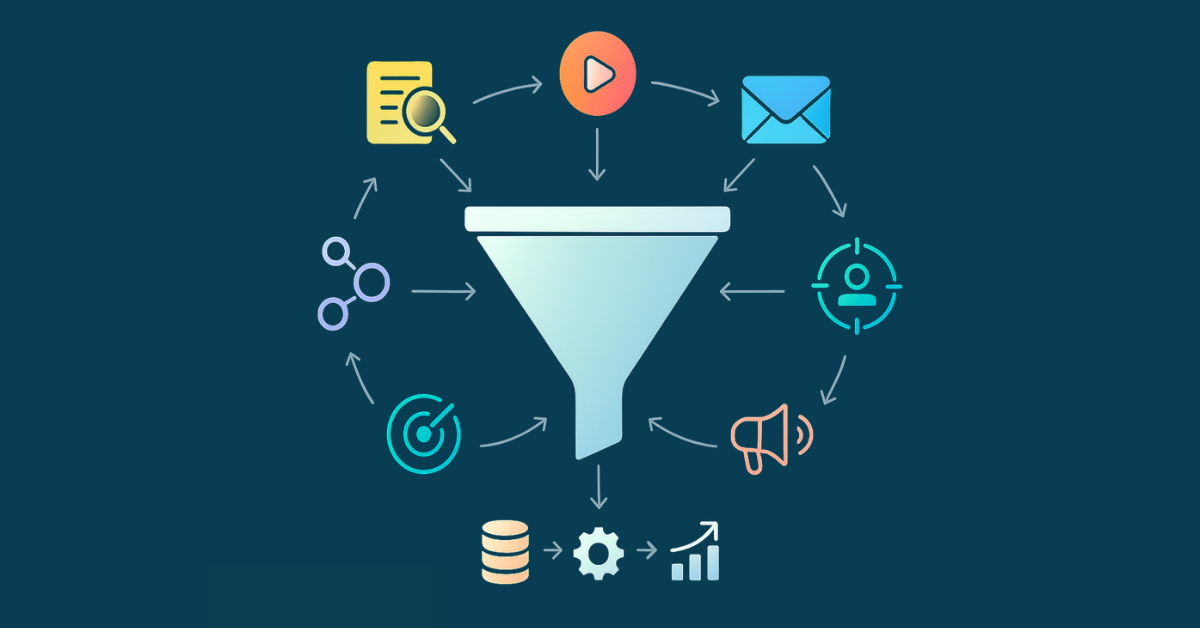
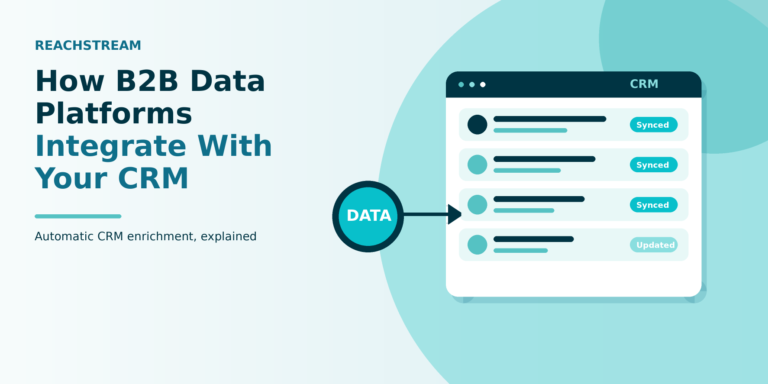
B2B lead generation means finding businesses that may need your product or service, getting their contact details, and identifying which ones are likely to become customers. It involves attracting potential customers through content and SEO or reaching out to them through cold emails, phone calls, and LinkedIn.
B2B lead generation remains the engine behind most sales pipelines. Buying committees are larger, buyers research on their own before they talk to anyone, and no single channel works for every team. Success is measured by qualified pipeline, not by how many names you collect.
What Is B2B Lead Generation?
B2B lead generation covers every activity that brings potential business customers into your pipeline. Inbound work, such as content marketing, SEO and webinars, attracts people who are already looking for answers. Outbound work, such as cold email, calling and LinkedIn outreach, starts the conversation with accounts you choose.
The ultimate goal is to move prospects through the sales funnel and turn them into paying customers.
Lead generation typically begins with an ideal customer profile (ICP), which describes the companies and roles most likely to buy, and a total addressable market (TAM), which sizes the pool of accounts you could sell to. Campaigns then capture contact details and qualify prospects against that profile.
How Does the B2B Lead Funnel Work?
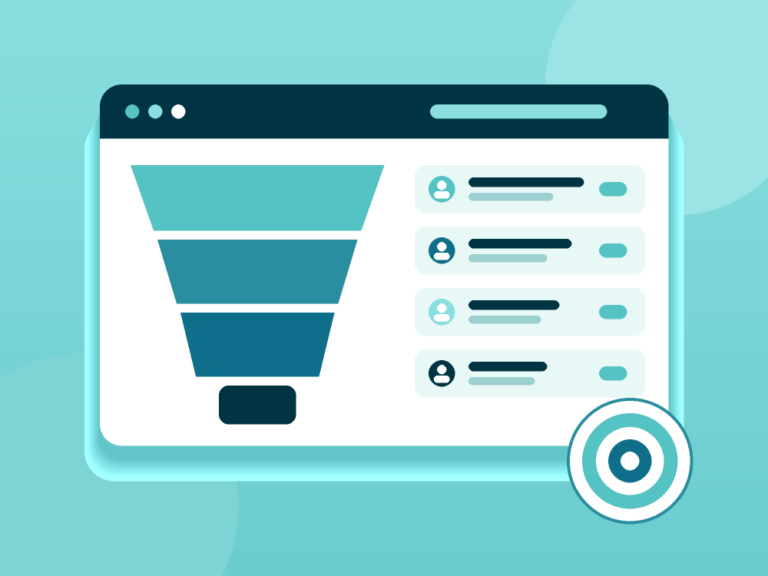
A funnel shows how a stranger becomes a customer. Each stage has a different job, and each needs different content and a different next step.

- Awareness: Prospects find you through content, ads, events or outreach. The aim is attention, not a sale.
- Lead: A prospect shares contact details, books a call or replies to a message. You now have someone to follow up with.
- Marketing qualified lead (MQL): The lead engages with your marketing and fits your ICP but is not ready to speak to sales.
- Sales qualified lead (SQL): The lead shows buying intent, for example by asking for a demo, and is handed to sales.
- Opportunity and customer: Sales run a proposal and close process, and onboarding turns the deal into a long-term account.
Leaks happen between stages, so measuring conversion at each step shows where to fix the process first.
Why Does B2B Lead Generation Matter?
B2B companies cannot wait for customers to come to them. A well-structured lead generation strategy helps you:
- Build a predictable sales pipeline
- Fuel revenue growth
- Inform your content and messaging
- Improve sales and marketing alignment
- Enhance forecasting and targeting
- Collect useful data on buyer behavior
Without it, you risk stalled pipelines, low engagement and inconsistent sales cycles.
MQLs vs SQLs: What Is the Difference?
Understanding the difference between marketing qualified leads (MQLs) and sales qualified leads (SQLs) is essential for effective nurturing and handoff.
Marketing Qualified Leads (MQLs)
- Engage with your marketing through your website, downloads or webinars
- Show interest but are not sales-ready
- Suit email nurturing, educational content and remarketing
Sales Qualified Leads (SQLs)
- Demonstrate buying intent by requesting demos or responding to outreach
- Ready for direct sales contact
- Are prioritized for calls, proposals or consultations
Tailor your messaging to each lead type. Sending a hard sales pitch to an MQL, or another ebook to an SQL, adds friction to the pipeline. Agree on written MQL and SQL definitions with sales so both teams count the same thing.
Get the Right Leads Instantly
Access free verified contacts, pre-qualified to match your MQL and SQL criteria.
15 B2B Lead Generation Strategies
No team needs all 15 strategies at once. The table compares them so you can choose a few that fit your market, budget and team size.
| Strategy | Best for | Funnel stage | Effort | Speed to results |
|---|---|---|---|---|
| Content marketing and SEO | Building long-term demand | Awareness | High | Slow |
| Lead magnets and gated content | Capturing contact details | Lead | Medium | Medium |
| Webinars and events | Deeper engagement | Lead to MQL | High | Medium |
| Email nurture sequences | Warming up leads | MQL to SQL | Medium | Medium |
| Paid search | High-intent demand | Awareness to lead | Medium | Fast |
| Paid social and retargeting | Reaching decision-makers | Awareness to lead | Medium | Fast |
| Account-based marketing | Named high-value accounts | MQL to SQL | High | Medium |
| Social selling | Relationship building | Awareness to lead | Medium | Medium |
| Cold email outreach | Starting conversations | Awareness to lead | Medium | Fast |
| Cold calling and direct dials | Reaching senior buyers | Lead to SQL | High | Fast |
| Referrals and partners | Warm introductions | Lead to SQL | Medium | Medium |
| Intent data | Finding in-market accounts | Awareness to MQL | Medium | Medium |
| Website conversion | Turning traffic into leads | Lead | Low | Fast |
| Reviews and case studies | Building trust | MQL to SQL | Medium | Slow |
| Trade shows and field events | Face-to-face contact | Lead to SQL | High | Medium |
1. Content Marketing and SEO
Creating valuable, educational content is still the most reliable long-term strategy. Blogs, white papers and case studies attract and inform buyers while they research.
Keyword research and on-page SEO drive discovery, and clear calls to action turn readers into leads. Pair SEO with a smart content repurposing plan so one strong guide becomes a webinar, a short video and several social posts without overloading your team.
2. Lead Magnets and Gated Content
A lead magnet is a useful asset, such as a template, worksheet, benchmark report or calculator, offered in exchange for contact details. Keep the form short to boost sign-ups while capturing key firmographic data such as company size and industry.
Gate only your best assets and leave the rest open so search engines and buyers can still find your work.
3. Webinars and Interactive Events
Webinars offer high engagement and deeper visibility into lead behavior. Use polls, surveys and Q&A sessions to qualify attendees, and segment them into MQLs and SQLs based on how they engage. Offer on-demand access afterward so the session keeps generating leads long after the live date.
4. Email Marketing and Nurture Sequences
Email remains a high-ROI channel for nurturing and converting leads. Segment by industry, behavior and funnel stage, and automate sequences based on triggers such as a content download.
A simple nurture flow moves from an introduction to a useful resource, then a feature highlight, a case study and a demo offer. Mix formats, including newsletters, case studies and invitations, so every message does not read like a pitch.
5. Paid Search
Paid search captures people who are already looking for a solution. Target high-intent keywords, write ads that match the search, and send traffic to a focused landing page rather than your home page. Review search terms often and add negative keywords so budget goes to buyers, not browsers.
6. Paid Social and Retargeting
LinkedIn Ads can reach business decision-makers by job title, seniority, industry and company size. Retargeting keeps your brand in front of visitors who did not convert the first time.
PPC and paid social allow precise targeting and rapid testing of offers and messaging, which makes them useful for learning what resonates before you scale.
7. Account-Based Marketing (ABM)
ABM focuses your resources on high-value accounts. Identify key accounts and the decision-makers inside them, create tailored campaigns such as landing pages, emails and ads, and align sales and marketing on shared goals.
Use personalization at scale to address the specific pain points of each account. Our ReachStream ABM guide walks through the process.
8. Social Selling
Use platforms like LinkedIn to engage with prospects directly. Connect and interact with ICPs through comments and messages, share relevant content to build trust, and move conversations off platform to a call or demo when the timing is right.
Social selling is most effective when combined with intent signals and high-quality content.
9. Cold Email Outreach
Cold email lets you start a conversation with accounts that match your ICP. Keep messages short, relevant and easy to answer, and send in small batches while you watch bounces and replies. Verify addresses before you send, because a high bounce rate can harm your sender reputation.
10. Cold Calling and Direct Dials
Calling still works for senior buyers who ignore email. Direct dials help you reach a person rather than a switchboard, and a short call script focused on one clear problem keeps conversations useful. Combine calls with email and LinkedIn touches, so each channel supports the others.
11. Referrals and Partner Programs
Warm introductions convert differently from cold outreach because trust is already in place. Ask happy customers for introductions at natural moments, such as after a successful rollout, and build partnerships with complementary vendors who serve the same buyers.
12. Intent Data
Intent data points to accounts that appear to be researching a topic, which can help you decide where to focus outreach first. Treat it as a signal, not a promise, and combine it with fit data such as industry and company size.
13. Website Conversion
More traffic only helps if visitors take the next step. Make the offer clear above the fold, keep forms short, add proof such as customer logos and reviews, and test headlines and calls to action. Small fixes to landing pages often lift lead volume without any extra spend.
14. Reviews and Case Studies
Buyers read reviews and customer stories before they speak to sales. Collect feedback on review sites, publish case studies with real context and results you can support, and link them from your sales emails and landing pages. Proof shortens the gap between MQL and SQL.
15. Trade Shows and Field Events
Face-to-face events still produce senior conversations that are hard to get online. Set meetings in advance, capture details at the booth with a short qualifying question and follow up within days while the conversation is fresh. Treat each event as a source of leads to nurture, not a one-day activity.
Which Strategy Should You Start With?
Start with the channel that matches your resources and sales cycle. A small team with a limited budget can begin with cold email, social selling and website conversion, which cost little and give fast feedback.
A team with a longer sales cycle and a few high-value targets may get more from ABM, referrals and events. A team that can invest in content over many months should add SEO early, since it compounds.
Pick two or three strategies, run them for a full quarter and measure results before you add more. Spreading effort across all 15 usually produces thin results everywhere.
Which Tools Do You Need?
The right tech stack improves speed, accuracy and scalability. Most teams need four layers.

CRM Systems
CRM systems: A CRM centralizes lead data, automates scoring and enables sales and marketing collaboration. Popular options include HubSpot, Salesforce and Pipedrive.
Lead Generation Databases
A contact database sources verified contact information for outreach based on your ICP. ReachStream Prospect is designed to help teams build targeted lists. AI Search lets you describe your ideal buyer in everyday language.
A built-in email verifier, data enrichment, CSV export and native Salesforce and HubSpot sync help move data into your stack. ReachStream lists GDPR compliance.
Automation & Analytics
Track behavior, trigger actions and refine campaigns using real-time reporting. Useful features include email automation for sequences and triggers, behavioral tracking to see who is engaging, and A/B testing to improve pages, subject lines and calls to action.
Intent and Enrichment Tools
These add signals and missing fields to your records so scoring and routing are more accurate.
Discover Top Lead Gen Tools
See how Reachstream and other platforms can elevate your sales results.
How Do You Convert Leads Faster?
Capturing a lead is just the start. Turning it into a customer requires precision and attention to detail.
1. Personalize Everything
Tailor outreach to company size, industry and role, to funnel stage and past engagement, and to known pain points and objectives. Avoid generic blasts, because buyers want solutions, not spam.
2. Master the Follow-Up
Use multi-channel, multi-touch sequences to stay top of mind. Do not rely on one email or one call. Combine email, LinkedIn, retargeting and SMS where appropriate.
Follow up promptly after key actions such as webinar questions or demo requests, and retarget interested leads who have not converted with customized ads.
3. Use Lead Scoring Intelligently
Assign numerical values to actions and attributes so you can prioritize high-intent leads. Customize scoring models for your business, automate routing of SQLs to sales reps and review scores regularly against conversion data.
4. Respond Quickly
Speed matters when a lead raises a hand. Set a clear service level so every SQL is contacted within an agreed time and no request sits unanswered.
5. Monitor and Optimize
Use the metrics below to refine your strategy on a monthly or quarterly basis.
Which Metrics Prove It Works?
Benchmarks vary widely by industry, deal size and channel, so set your own baseline first and then improve against it. These are the measures most teams track.
| Metric | How to calculate it | What it tells you |
|---|---|---|
| Lead-to-MQL rate | MQLs divided by total leads | Whether your targeting and content attract the right people |
| MQL-to-SQL rate | SQLs divided by MQLs | How well marketing and sales agree on quality |
| Lead-to-opportunity rate | Opportunities divided by leads | The overall health of your funnel |
| Time to conversion | Days from first touch to opportunity | How fast leads move through the funnel |
| Cost per lead | Spend divided by leads | The efficiency of each channel |
| Cost per opportunity | Spend divided by opportunities | Which channels create real pipeline |
| Email engagement | Opens, clicks and replies | Whether your messaging resonates |
| Channel attribution | Pipeline by source | Where to invest more or less |
Review these numbers by channel, not only in total. A channel with a low cost per lead can still be a poor investment if few of its leads become opportunities.
Conclusion
B2B lead generation is more than filling a pipeline. It is about attracting the right people, engaging them with purpose and converting them with efficiency. By combining content, technology, personalization and analytics, you can build a lead generation engine that powers sustainable growth.
Whether you are a scaling startup or an enterprise team, modern B2B lead generation is your key to a competitive edge.
Fuel Your Outreach with Quality Leads
Reach decision-makers and shorten your sales cycle with verified contact data.
FAQs
1. What is B2B lead generation, and how does it work?
B2B lead generation is the process of attracting and converting businesses into potential customers. It combines inbound methods, such as content and SEO, with outbound methods, such as email and LinkedIn outreach. Leads are captured, qualified and handed to sales when they show buying intent.
2. What is the difference between an MQL and an SQL?
An MQL has shown early interest through marketing interactions but is not ready to buy. An SQL has shown stronger buying intent, such as asking for a demo, and is ready for direct contact from sales. Written definitions agreed by marketing and sales keep the handoff clear.
3. What are the best B2B lead generation strategies?
The best strategy depends on your market, budget and sales cycle. Common choices include content and SEO, email nurture, account-based marketing, webinars, paid search, social selling and cold outreach. Start with two or three, measure results for a quarter and then expand.
4. Which channels produce the best B2B leads?
Strong channels include LinkedIn, email, SEO-driven content, and account-based marketing (ABM) campaigns. Results vary by industry and deal size, so compare cost per opportunity by channel rather than cost per lead alone.
5. Which tools are most effective for B2B lead generation?
Most teams use a CRM such as HubSpot, Salesforce or Pipedrive, a contact database such as ReachStream Prospect, and automation and analytics tools for sequences and reporting. Choose tools that integrate with each other so data flows without manual copying.
6. How long does B2B lead generation take to show results?
Outbound methods such as cold email and calling can produce replies within weeks, while inbound methods such as SEO usually take several months to build momentum. Many teams see early signals within one to three months, but timing depends on your market and sales cycle.
7. How do you measure success in B2B lead generation?
Work backward from your target. Divide the revenue goal by average deal size to get the number of deals, then divide by your close rate to find the opportunities needed, and by your lead-to-opportunity rate to find the leads required. Use your own conversion data rather than industry averages.
8. How many leads do I need to hit my sales target?
Work backward from your target. Divide the revenue goal by average deal size to get the number of deals, then divide by your close rate to find the opportunities needed, and by your lead-to-opportunity rate to find the leads required. Use your own conversion data rather than industry averages.
Table of Contents

Kate Anderson
Author
Access 500M+ verified business emails and grow your sales pipeline effortlessly.
Claim Your 100 Free Export Credits Today!
Power Your Sales with Targeted Data
Don't forget to share this post!















Check out our other blogs!
ReachStream’s Direct Dial Database: What Makes It Different
November 4, 2026
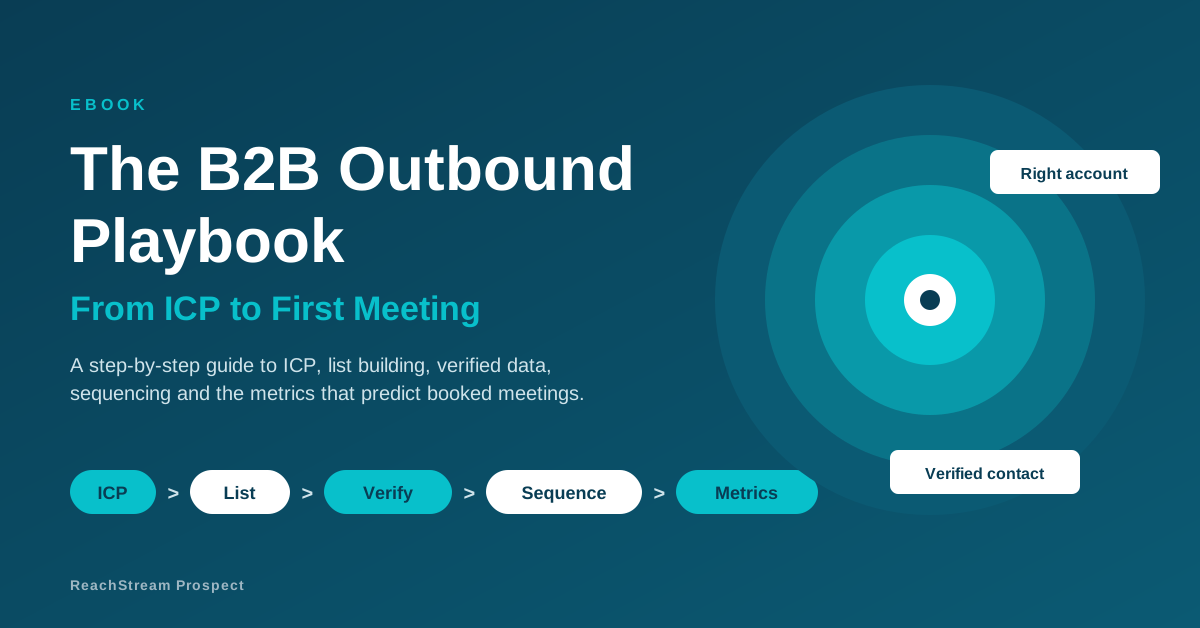
The B2B Outbound Playbook: From ICP to First Meeting
November 4, 2026
What Is Prospecting? A Beginner’s Guide for Sales Teams
November 3, 2026