
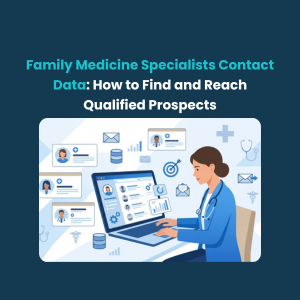


How to Evaluate B2B Data Vendors for Accuracy and Compliance
The Family Medicine Specialists Email List identifies family medicine physicians, practice leaders, and healthcare decision-makers for legitimate B2B communication. Records should contain business details, not private data.
Family medicine professionals provide broad primary care in practices, groups, hospitals, outpatient facilities, and community health organizations. They may interest providers of software, devices, diagnostics, medicines, equipment, education, consulting, and practice-management services. Effective campaigns need a defined audience, verified records, and relevant segmentation.
Family medicine specialist contact data is structured professional information about physicians and healthcare organizations connected with family medicine. It may include a name, title, specialty, practice, business email, business phone, location, and organizational role. ReachStream’s family medicine guide and doctors email list provide examples of this type of contact-data resource.
Professional contact data should support a work-related conversation and exclude home addresses, personal email accounts, personal phone numbers, health information, and unrelated details. With a lawful basis, permission where required, opt-out handling, and channel compliance, it can support sales research, education, partnerships, events, and market research.
The audience may include family medicine physicians, primary care physicians, practice owners, medical directors, administrators, and decision-makers. A focused physician email list or internal medicine list can support research, but the final audience should match the objective.
Create an ideal prospect profile before building a database. These criteria keep the list focused on accounts and roles with a plausible business need. A targeted contact list is useful when its filters fit the campaign rather than simply increasing record volume.
Businesses can identify qualified family medicine prospects through directories, healthcare websites, events, first-party records, and B2B data platforms. ReachStream’s healthcare email list is one platform option; review its fields, sources, terms, and compliance controls.
Use professional, relevant records that are lawfully processed and suitable for the intended channel; do not collect private personal information simply because it is available.
A family medicine contact list should identify the person, account, role, and relevance without unnecessary personal information.
Data field | B2B use |
Full name | Identifies the professional |
Job title | Indicates responsibility and seniority |
Specialty | Confirms family medicine relevance |
Practice or organization | Supports account targeting |
Business email | Enables professional communication |
Business phone | Provides another work channel |
Location | Supports geographic segmentation |
Practice type | Refines campaign targeting |
Hospital affiliation | Adds organization context |
Website | Supports account research |
Source and review date | Documents provenance and maintenance |
Add organization size, locations, profile URL, technology, campaign status, and suppression status only when useful. Retain the source and review date.
Businesses can find qualified family medicine prospects by defining the audience, identifying relevant organizations and professionals, collecting work data, verifying it, segmenting records, and reviewing the database. This is more useful than collecting unqualified names.
Verification combines email checks with professional and organizational review. An address may accept messages after a physician changes practices, so check titles, affiliations, company details, bounces, and opt-outs. ReachStream’s email verification guide explains this process.
Because roles and affiliations change, compliance teams should review the process against applicable privacy and marketing requirements.
Segmentation groups contacts by a meaningful business attribute so the message matches the account’s situation. A healthcare software company, for example, could create separate campaigns for independent practices, large physician groups, and hospital-affiliated primary-care teams. A physician database guide offers further context for evaluating provider-based research.
Useful segments include geography, practice type, independent versus group status, affiliation, organization size, title, seniority, clinical focus, business role, and product relevance. A scheduling message may suit administrators, while device education may suit physicians. Keep a segment only when it changes the message or next step.
ReachStream can serve as a B2B contact-data option for teams researching family medicine professionals and related healthcare accounts. Its nurse practitioner list and physician list vendors may support adjacent audience research, while role and business filters can help organize a focused family medicine specialist contact list.
The platform may support contact discovery, title filtering, organization research, list building, and campaign preparation. Evaluate its fields, sources, verification workflow, terms, and privacy controls; it should complement, not replace, compliance review.
Explore ReachStream to find targeted family medicine specialist contact data for your B2B campaigns.
Professional contact data can support B2B applications when the message relates to the recipient’s role and organization. This guide to medical device campaigns illustrates one application.
A structured database can support lead generation, account-based marketing, product launches, equipment sales, supplier partnerships, software sales, trade show follow-up, market expansion, and business development. It should guide account selection.
An ink manufacturer might divide companies by packaging, commercial, and label production, then prepare different product information for each group. A workflow software provider could focus on technology managers and production leaders at firms with several facilities. A sales pipeline guide can help connect contact research with pipeline planning.
Use it to prioritize accounts, assign ownership, and record responses.
Effective professional communication starts with account research and a clear reason for contact. This verified physician lists guide offers a comparison point before teams choose a channel.
Family medicine contacts can support legitimate B2B purposes when the audience matches the offering. This healthcare mailing-list guide provides broader context for comparing specialty targeting with wider healthcare research.
The common problems are weak audience definition, incomplete records, and poor maintenance.
Measurement should connect activity to qualified progress. Delivery rate shows whether messages reached valid business addresses; open and click-through rates indicate interaction, subject to tracking limits; response rate reflects direct engagement. Qualified prospects, meetings, conversion rate, cost per qualified lead, pipeline contribution, and revenue connect activity to commercial outcomes. Compare by segment and revise weak audiences or value propositions.
The process follows seven stages: Define → Identify → Verify → Segment → Communicate → Measure → Update. Set the audience, find accounts, verify, segment, communicate by role, measure outcomes, and update.
The Family Medicine Specialists Email List works best for disciplined audience research, not mass distribution. Clear criteria, relevant data, accurate records, segmentation, useful communication, and maintenance give healthcare B2B teams a sound process. ReachStream resources and its nurse practitioner guide can support further research.
It is a structured collection of professional information about family medicine physicians, practices, organizations, and related decision-makers, including business email, title, specialty, organization, location, source, and review date.
They work across primary-care settings and may influence clinical, operational, educational, or purchasing decisions, making them relevant to healthcare products and services.
It should contain name, title, specialty, organization, business email, phone, location, practice type, source, and review date, while excluding private information.
Define the audience, identify suitable organizations and professionals, collect and verify work details, remove duplicates, segment contacts, and review records regularly.
Check business email validity, title, affiliation, organization details, bounces, opt-outs, duplicates, source, and review date.
Use geography, practice type, affiliation, organization size, title, seniority, business role, and product relevance. Keep segments that change the message or campaign action.
Marketing professional with a Master’s degree in Marketing, specializing in SEO, content strategy, social media, performance marketing, prospecting, and demand generation.
Access 200M+ verified business emails and grow your sales pipeline effortlessly.
Don't forget to share this post!















Check out our other blogs!
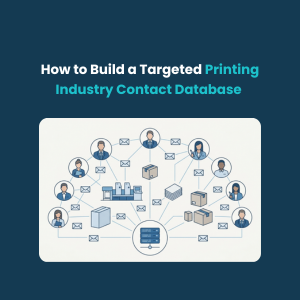
How to Build a Targeted Printing Industry Contact Database
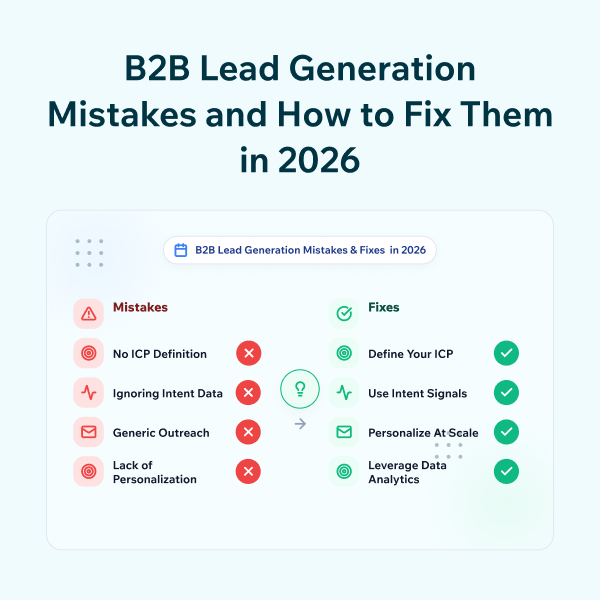
B2B Lead Generation Mistakes and How to Fix Them in 2026
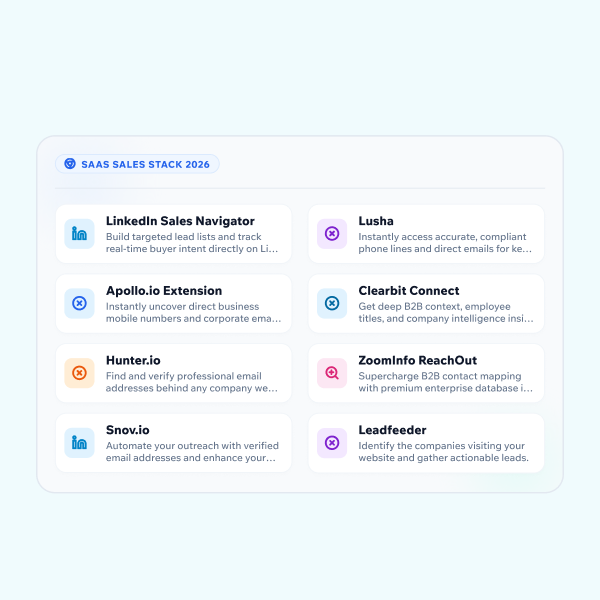
Chrome Extensions for Sales Prospecting in 2026