


> Sales
How to Evaluate B2B Data Vendors for Accuracy and Compliance

Sales and marketing records often miss a current job title, verified email, company name, or industry. People change roles, and forms collect limited information, which gradually reduces CRM data quality.
B2B data enrichment improves existing lead, contact, and company records by adding or updating useful information. It helps teams qualify prospects, create focused segments, personalize messages, and prioritize accounts. This guide explains how enrichment works, which fields matter, and how tools differ.
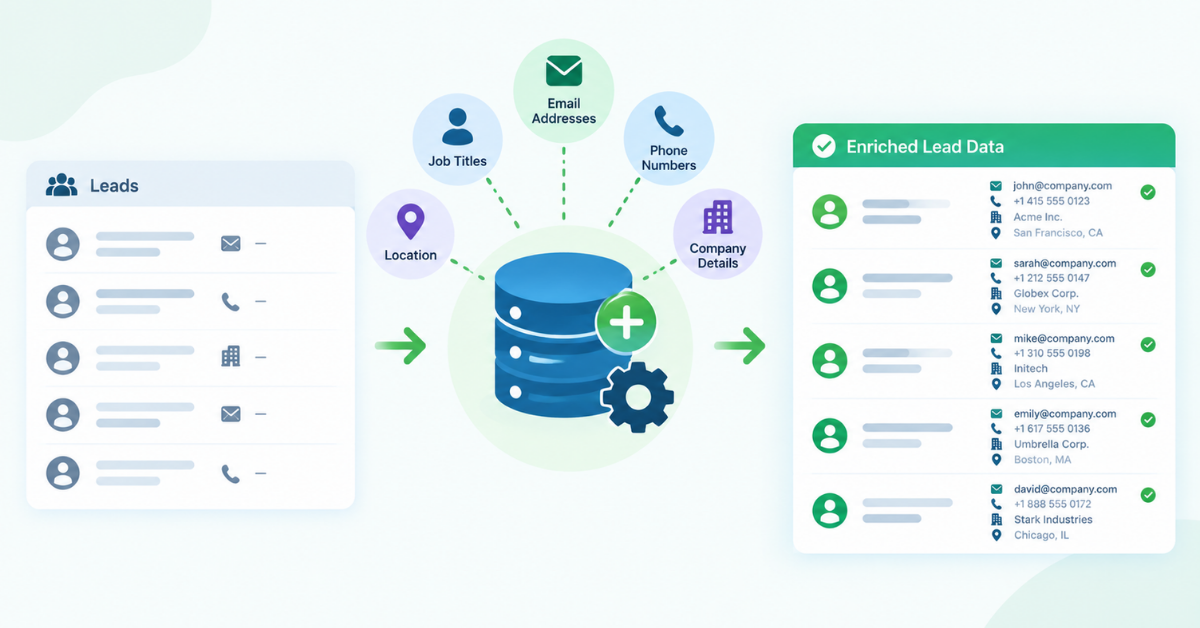
B2B data enrichment adds, corrects, or updates information in existing business records. A provider or internal system matches a lead or company with data sources, then supplies fields such as job title, business email, industry, location, company size, or technology use. Enrichment improves existing data; it does not simply create new leads.
A team might enrich a name and company domain with a professional email, department, and seniority. Results depend on the source, matching method, validation, and maintenance.
ReachStream presents data enrichment for incomplete contact and company records. Its contact and company data page shows fields teams may assess.
Incomplete data affects qualification, prospecting, personalization, segmentation, account targeting, campaigns, and CRM reporting. Role changes can lead representatives to the wrong person, while duplicates can distort account activity.
Enrichment adds context for better decisions. Firmographic fields support account segments. Seniority and department help teams select relevant contacts. Email verification lets a team review an address before sending. These improvements support data quality, but they do not prove buying readiness.
A typical data enrichment process includes these steps:
Automation can update records in batches or when a record enters a system. APIs connect enrichment with applications, while manual review helps with uncertain matches. Teams can review ReachAPI for an example of an API-oriented product area and the B2B data platform page for broader platform context.
Contact Data : Contact enrichment may add a name, professional email, phone, job title, department, and seniority. These fields help teams identify the right role.
Company Data : Company enrichment may add a website, industry, business category, company size, revenue range, and location for ICP comparisons.
Firmographic Data : Firmographic data describes an organization through fields such as industry, employee count, revenue, geography, and business model.
Technographic Data : Technographic data describes the technologies a company uses. It can help software providers find compatible stacks or integration needs.
Intent and Behavioral Signals : Some providers add research or engagement signals. These may complement other data, but they aren’t standard in every service and shouldn’t replace qualification.
Lead enrichment adds prospect-level or account-level context, such as industry, company size, location, or revenue range. Contact enrichment focuses on an individual professional, such as current job title, department, seniority, phone number, or business email. Company enrichment adds account details, while technographic enrichment adds technology information.
| Plan | Price (billed annually) | Email credits / month |
|---|---|---|
|
Lead enrichment |
Prospect-level information |
Lead qualification |
|
Contact enrichment |
Individual professional details |
Sales prospecting |
|
Company enrichment |
Account-level information |
Account targeting |
|
Technographic enrichment |
Technology information |
ICP identification |
These processes often work together. A team may enrich a lead with company size, then enrich the related contact before a sales handoff. ReachStream explains its data collection approach on its official data page.
B2B data enrichment tools match existing records with business data and return selected fields. Depending on the provider, they may support contact and company enrichment, CRM connections, email verification, firmographic or technographic data, duplicate detection, APIs, and automation.
Coverage differs by provider and market. ReachStream has an email verifier and Chrome Extension. Test features against your own records.
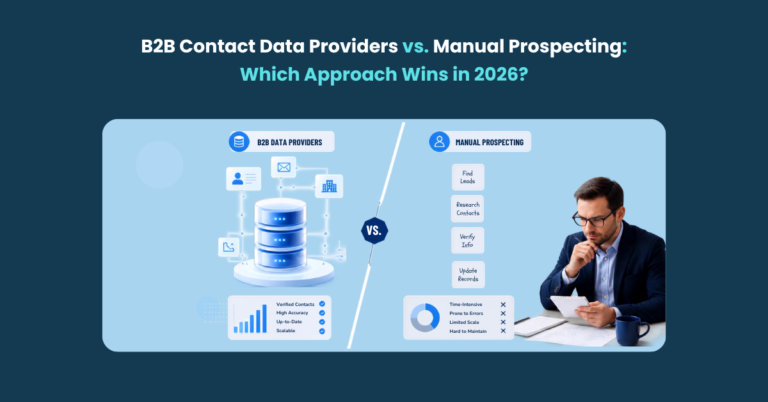
Manual enrichment suits a small set of high-value accounts but takes time. Automated enrichment scales matching across larger datasets but needs controls for uncertain results. API-based enrichment connects applications to a service but requires technical ownership. CRM-based enrichment updates existing records but needs correct permissions and duplicate rules. Review B2B database providers for a related evaluation topic.
Enriched data helps teams compare a lead with its ICP. Job title, seniority, industry, company size, revenue, geography, department, account traits, and technology stack help assess fit.
The data supplies context, not a final verdict. Teams should combine it with conversations, engagement, and other qualification evidence.
Accurate fields support specific segments and help teams adapt messages to a role or business situation. Account-based marketing teams can use company information to prioritize named accounts.
CRM enrichment can improve record completeness and give sales representatives context before a call. See sales data and marketing insights.
Teams face incomplete data, duplicates, incorrect matches, outdated values, conflicts, weak CRM connections, and privacy obligations.
Treat enrichment as ongoing management. Set rules for source priority, corrections, and retention, then refresh changing fields.
Use this checklist:
Database size alone does not show whether a provider fits your workflow. A smaller source with useful fields and clear matching rules may serve your CRM better than a larger source with weak coverage in your target segment. Check ReachStream pricing alongside your field and usage requirements.
Document field ownership and correction rules so teams use each field consistently.
Lead generation finds potential prospects. Data enrichment adds or updates information in records a team already has. Verification checks whether a field, such as an email address, appears valid. Prospecting uses research and judgment to identify and prioritize contacts
| Process | Main Purpose | Example |
|---|---|---|
|
Lead generation |
Find potential prospects |
Identify target companies |
|
Data enrichment |
Add or update information |
Add job title and company size |
|
Verification |
Check data validity |
Validate an email address |
The processes can work in sequence: generate a list, enrich company and contact fields, verify important addresses, and decide which accounts deserve sales attention. The lead generation resource covers a related stage.
ReachStream is a B2B contact-data solution with areas for contact and company information, data enrichment, email verification, a Chrome Extension, and ReachAPI. Businesses can assess these areas for research, CRM enrichment, and sales workflows.
Teams can explore ReachStream Prospect and its technology insights page, then test coverage against actual records.
Define the ICP, audit CRM records, and identify fields that affect qualification. Select suitable sources, match records, enrich approved fields, verify contacts, remove duplicates, resolve conflicts, and sync the result.
Monitor corrections, missing fields, and source performance, then schedule refreshes.
B2B data enrichment can help when CRM records are incomplete, sales teams lack prospect context, marketing segments are too broad, account-based marketing needs company details, or researchers spend excessive time checking records manually.
The investment makes sense when a business defines its data requirements, tests source quality, and maintains records after the first update. Start with a focused use case, measure data quality, and expand only after the process works.
B2B data enrichment adds useful context to existing lead, contact, and company records. Lead enrichment, contact enrichment, verification, and lead generation solve different problems, but they can work in one coordinated process. Strong results depend on relevant fields, careful matching, clear governance, and regular maintenance.
Start by auditing CRM records, identifying qualification fields, and comparing providers against those needs.
B2B data enrichment adds or updates information in existing business records. Common fields include job title, business email, company size, industry, location, revenue range, and technology use. The process improves records for qualification, segmentation, account targeting, and CRM management.
Lead enrichment adds prospect-level or account-level information to an existing lead record. It may include industry, company size, geography, revenue range, department, or role. Teams use these details to compare a lead with their ICP and decide which qualification step should follow.
Contact enrichment updates details about an individual professional. Typical fields include full name, job title, seniority, department, professional email, and phone information. It helps sales teams identify relevant people, but it doesn’t prove a person is ready to buy.
B2B data enrichment tools match existing lead, contact, or company records with business data sources. Depending on the provider, they may support CRM enrichment, email verification, company information, technographic data, duplicate detection, API connections, or automated workflows.
Compare coverage, accuracy, freshness, field availability, geographic reach, verification methods, CRM integrations, API access, automation, pricing, scalability, privacy practices, and support. Test a provider with your own CRM sample and judge results against your ICP.
No. Lead generation finds potential prospects, while data enrichment adds or updates information in records a team already has. Verification checks whether a field appears valid. These activities can work together, but each has a different purpose.
Author

Access 200M+ verified business emails and grow your sales pipeline effortlessly.
Don't forget to share this post!















Check out our other blogs!
ReachStream Prospect vs. Prospeo: Which Delivers More Accurate Data
B2B Data Enrichment: Complete Guide to Enriching Lead Data
The Complete Guide to B2B Data Verification in 2026
ReachStream Prospect Reviews in 2026: What Real Users Say on G2